-
UID: 1569053 
-
- 注册时间2012-06-21
- 最后登录2026-05-01
- 在线时间22912小时
-
- 发帖181598
- 搜Ta的帖子
- 精华2
- 金币625560
- 道行20030
- 原创769
- 奖券471
- 斑龄0
- 道券30
- 获奖0
-
访问TA的空间加好友用道具

UID: 1569053
- 发帖
- 181598
- 金币
- 625560
- 道行
- 20030
- 原创
- 769
- 奖券
- 471
- 斑龄
- 0
- 道券
- 30
- 获奖
- 0
- 座驾
-
- 设备
-
- 摄影级
-
在线时间: 22912(小时)
注册时间: 2012-06-21
最后登录: 2026-05-01
|
—
本帖被 xgch 执行加亮操作(2026-04-02)
—
设计单位
Architectus
地址
澳大利亚
项目年份
2026
摄影
Hufton Crow, Nicole England, Ned Donohoe
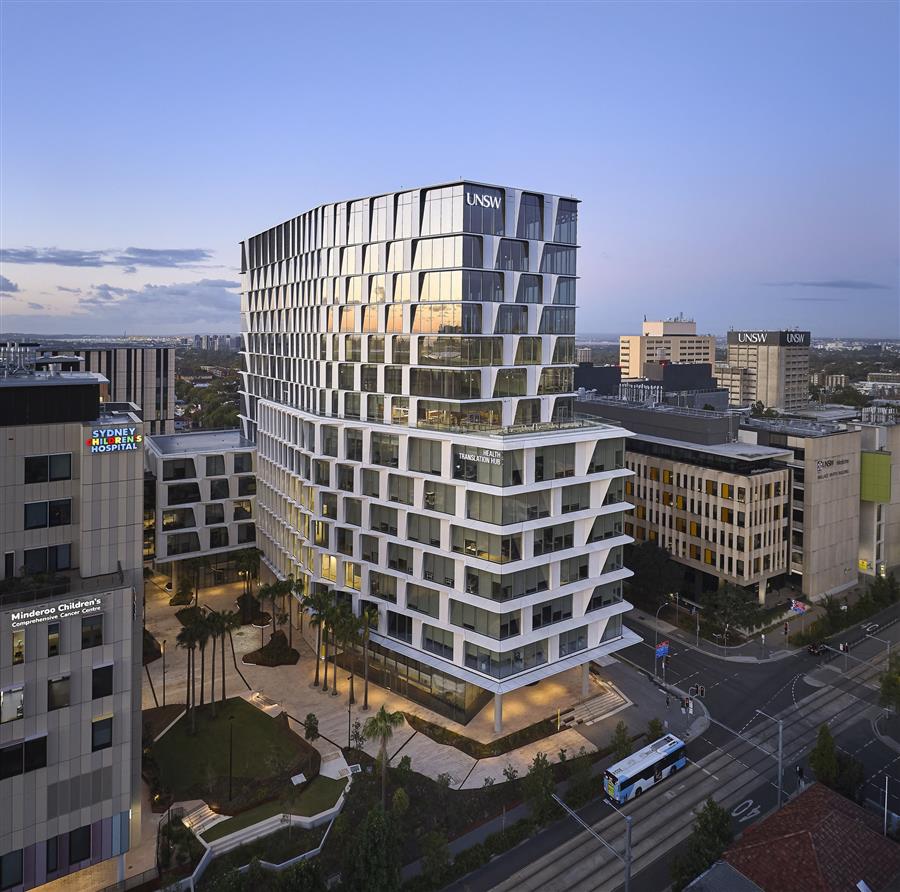
新南威尔士大学健康转化中心(HTH)旨在成为创新、合作与社区发展的典范,其设计是一个兼具建筑与景观特色的解决方案,将新南威尔士大学肯辛顿校区与兰德威克健康与创新区(RHIP)连接起来。该设计将教育、研究和医疗保健整合在一个相互关联的生态系统中,促进了知识交流和转化型医疗成果,缩短了健康研究与临床实践之间的反馈周期。因此,从实验室(“实验台”)到患者护理(“床边”)以及反之的发现过程变得更加高效,最终为社区带来了更好的健康结果。
The UNSW Health Translation Hub (HTH) is conceived as a landmark for innovation, collaboration, and community, an architectural and landscape response that bridges the UNSW Kensington Campus with the Randwick Health and Innovation Precinct (RHIP). The design unites education, research, and healthcare within a connected ecosystem that fosters knowledge exchange and translational health outcomes, which shortens the feedback loop between health research and clinical practice. Subsequently, the discoveries from the laboratory ("bench") to patient care ("bedside") and vice versa are more efficient, ultimately, leading to improved health outcomes for the community.
连接校园与区域——该建筑位于海德街和博塔尼街的交汇处,地理位置优越,不仅在实际操作上,而且在象征意义上都将新南威尔士大学的校园与相邻的医院区域连接了起来。该建筑开放且具有渗透性的地面平面设计,整合了整个场地内的公共活动空间,为场地内的交通提供了连接点,将周边的交通网络与关键的校园和医疗设施连接起来。两座玻璃材质的行人天桥进一步强化了这种连通性,将该建筑与西边的华莱士·沃特建筑以及东边的悉尼儿童医院和米德罗奥儿童综合癌症中心连接起来,形成了人员、思想和探索的无缝流动。
Connecting Campus and Precinct – Strategically located at the interp of High and Botany Streets, the HTH physically and symbolically connects the UNSW Campus with the adjacent hospital precinct. The building's open and permeable ground plane integrates public movement through the site, providing through-site links that connect the surrounding transport network with key campus and health destinations. Two glazed pedestrian bridges reinforce this connectivity, linking the HTH to the Wallace Wurth Building to the west and the Sydney Children's Hospital and Minderoo Children's Comprehensive Cancer Centre to the east, creating a seamless flow of people, ideas, and discovery.
建筑表达——这座建筑共 14 层,其独特的造型体现了其在凝聚人、学科和理念方面所发挥的作用。其建筑风格通过独特的外立面展现了轻盈、通透和动感,该外立面的设计灵感源自悉尼东部海岸的风蚀沙丘,是对“乡村与地域”的现代诠释。外立面采用了突出的檐口、双层玻璃和隔热板,能够控制阳光进入,同时使建筑的体量变得无形。玻璃增强混凝土(GRC)面板、弯曲的铝制遮阳板和高性能玻璃的组合实现了 60%的太阳辐射减少,同时保持了视觉的透明度和开放性。这种分层系统营造出深度和纹理,使光线和阴影在一天中不断变化。在地面层,高度透明的外立面增强了通透性和欢迎感,而塔楼轻盈的“天空”式表达则为该区域树立了市政地标。材料选择借鉴了当地景观的沙色色调和纹理;轻质砖石、大面积玻璃和使建筑扎根于所在位置的混凝土饰面。
Architectural Expression – Rising 14 storeys, the building's sculptural form embodies the building's role in uniting people, disciplines, and ideas. Its architecture expresses lightness, permeability, and movement with a distinctive facade inspired by the wind-shaped dunes of Sydney's eastern coastline, a contemporary interpretation of Country and place. A facade system of projecting hoods, double glazing and insulated panels provides solar control while dematerialising the building's mass. The composition of glass reinforced concrete (GRC) panels, curved aluminium sunshades, and high-performance glazing achieves a 60 per cent reduction in solar radiation while maintaining visual transparency and openness. This layered system creates depth and texture, capturing shifting light and shadow throughout the day. At ground level, the highly transparent facade enhances permeability and welcome, while the tower's lighter expression "of the sky" establishes a civic beacon for the precinct. Material selections draw inspiration from the sandy tones and textures of the local landscape; light masonry, expansive glass, and concrete finishes that ground the building in place.
社交空间与内部体验——在 HTH 的核心区域,有一个多层的中庭环绕着建筑的社交与协作中心。这个充满光线的垂直空间通过一个层叠式的特色楼梯和宽敞的流通区域,将四个裙楼层面连接起来。这些空间促进了偶然的相遇,鼓励学者、研究人员、临床医生、学生以及公众之间的互动。中庭展示了建筑的内部构造,象征着当代转化型健康研究的透明度。室内设计基于建筑和景观设计中所引用的海岸地形元素。创造出具有实体形态的组件的基准点,形成座位、桌子、长椅和种植区域。微妙变化的地面光泽定义了路径,并有助于实现直观的空间导航。具有丰富纹理的材料突出了互动点,并将空间隔离以达到良好的声学性能。
Social Heart and Interior Experience – At the centre of the HTH, a multi-level atrium weaves around the social and collaborative heart of the building. This light-filled vertical space visually and physically connects four podium levels through a cascading feature stair and generous circulation zones. These spaces foster chance encounters that encourage interaction among academics, researchers, clinicians, students, and the public. The atrium reveals the inner workings of the building, symbolising the transparency of contemporary translational health research. The interior design builds on the coastal landforms referenced in the architecture and landscape design. Creating datums of materialised components that form seating, tables, benching, and planting zones. Subtle changing floor patina defines pathways and assists in intuitive spatial navigation. Texturally rich materials highlight engagement points and isolate spaces to achieve high acoustic performance.
地点与国家——HHT 以开放的姿态面向公众领域,其城市景观彰显了地域、文化与联系。该景观由耶拉宾金和阿斯佩克特工作室共同设计而成,将原住民对地点的理解融入其中,通过形态、植物配置和材料来展现该场地的历史和生态。该景观位于布罗顿湾和悉尼港之间的历史沙丘之上,通过砂岩平台、特有植被以及一系列用于聚会、学习和沉思的户外空间,展现了这些不断变化的海岸地形。多样化的植物配置借鉴了本土植物的药用和文化意义,丰富了在该场地内移动的体验,并强化了建筑更广泛的关于治愈、学习和探索的叙事。以“地域即为良药”为原则,该理念尊重了比迪加尔和加迪加尔民族的持久知识,营造出一个能够修复、教育和连接的环境。在建筑的边缘部分,一层的活动场地和夹层层楼则设有面向公众的各类功能区,包括零售区、展览区、临床区和教育区,从而在新南威尔士大学与周边社区之间建立起一个透明且亲切的互动界面。
Place and Country – The HTH opens generously to the public domain through a civic landscape that celebrates Country, culture, and connection. Developed in collaboration with Yerrabingin and Aspect Studios, the public realm integrates an Indigenous interpretation of place, expressing the site's history and ecology through form, planting, and material. Positioned atop the historic sand dunes between Botany Bay and Sydney Harbour, the landscape scheme evokes these shifting coastal landforms through sandstone terraces, endemic vegetation, and a sequence of outdoor rooms for gathering, learning, and reflection. A diverse planting palette draws on the medicinal and cultural significance of native flora, enriching the experience of movement through the site and reinforcing the building's broader narrative of healing, learning, and discovery. Guided by the principle of Country as Medicine, the concept honours the enduring knowledge of the Bidjigal and Gadigal peoples, creating a setting that restores, educates, and connects. At the edges, an activated ground and mezzanine level host public-facing functions, including retail, exhibition, clinical, and educational spaces, establishing a transparent, welcoming interface between UNSW and the broader community.
可持续性与性能——该项目与 Atelier Ten 公司紧密合作,其环境可持续发展策略与新南威尔士大学的气候行动计划高度契合,主要围绕四个核心支柱展开:合作、健康与福祉、未来适应能力和碳效率。这些目标通过被动环境原则、高性能建筑系统以及可适应的外立面得以融入设计之中,这些外立面增强了灵活性、舒适度和长期耐久性。HTH 获得了 6 星级绿色星(建筑 v1 版)评级,得益于负责任的建筑围护结构,其 30%的外立面达到了 10 或更高的负责任产品价值(RPV)标准。该建筑在环境性能方面取得了显著提升,与参考基准相比,碳排放和能源使用量分别减少了 20%。它完全实现电气化,并由 100%可再生能源供电,还配备了一个 100 千瓦的屋顶太阳能光伏阵列。
Sustainability and Performance – Working in close collaboration with Atelier Ten, the project's ESD strategy is deeply aligned with the UNSW Climate Action Plan, centred on four core pillars: collaboration, health and wellness, future resilience, and carbon efficiency. These ambitions are embedded in the design through passive environmental principles, high-performance building systems, and an adaptable facade that enhances flexibility, comfort, and long-term durability. The HTH achieves a 6 Star Green Star (Buildings v1) rating, supported by a responsibly sourced building envelope, with 30% of the facade meeting a Responsible Product Value (RPV) of 10 or more. The building delivers significant environmental performance improvements, including a 20% reduction in both carbon emissions and energy use compared to reference benchmarks. It is fully electrified and powered by 100% renewable energy, complemented by a 100 kWh rooftop solar photovoltaic array.
运营绩效指标包括达到 5.5 星的 NABERS 能源评级和 5 星的 NABERS 水质评级,而数字化抗风险能力和未来适应性则通过 WiredScore 铂金认证得以体现。这些举措共同确立了该项目作为可持续、具有抗风险能力和面向未来的医疗与研究基础设施的标杆地位。为了促进可持续出行,从博塔尼街通过专用自行车坡道到达的终点站设施可容纳多达 3000 名乘客,提供超过 120 个自行车停放处、淋浴间、储物柜和无障碍设施,鼓励人们进行积极的、低碳的通勤方式。该健康与研究中心提供了超过 2500 平方米的公共开放空间,展示了可持续性不仅能够影响建筑物的性能,还能塑造场所的质量、联系和社区。
Operational performance targets include a 5.5 Star NABERS Energy rating and a 5 Star NABERS Water rating, while digital resilience and future readiness are recognised through a WiredScore Platinum certification. Together, these initiatives establish the project as a benchmark for sustainable, resilient, and future-focused health and research infrastructure. To promote sustainable mobility, end-of-trip facilities accessed via a dedicated bike ramp from Botany Street cater for up to 3,000 occupants, providing over 120 bicycle spaces, showers, lockers, and accessible amenities that encourage active, low-carbon commuting. Contributing more than 2,500 sqm of publicly accessible open space, the HTH demonstrates how sustainability can shape not only the performance of a building, but the quality of the place, connection, and community it supports.
项目图纸▲平面图


设计师应该充分去了解屋主人的生活习惯和美学需求,在项目设计初期我们进行了充分的沟通,让空间更好的去服务于屋主是设计的主旨。
The designer should try to fathom the homeowner’s lifestyle and artistic inclinations. At the outset of this project, extensive dialogues were undertaken to ensure that the spatial composition dutifully caters to the homeowner’s requisites.
屋主是丁克族,是一位热衷于游戏的玩家,喜欢开阔的空间视觉,上术设计依据他的根本需求对空间进行设计。
Belonging to the DINK demographic, the homeowner is a devoted gamer with a penchant for spatial expansiveness. This design paradigm stems from his elemental necessities.


原本的两居室空间,为了符合屋主的愿景,拆除原有次卧,我们重新设计的一个独立空间,可以推拉的门板和窗帘,使空间在开放和隐私之间实现了和谐的平衡,通透的顶部设计使其具备通风条件,以满足屋主朋友的来访休息。在满足睡眠需求的同时,充分利用空间,使其即是卧室,也是衣帽间,也是储物间。
The initial blueprint featured a two-bedroom configuration. However, to align with the homeowner’s vision, the original auxiliary bedroom was dismantled and ingeniously reborn as an autonomous zone. This versatile space, adorned with sliding panels and drapes, achieves a harmonious balance between privacy and translucence. The capacious ceiling design ensures optimal ventilation, catering to the relaxation needs of the homeowner’s friends. Seamlessly merging functionality, the space morphs into a haven for repose, a wardrobe, and a storage realm.


住宅以间接照明为主形成的空间基调光照氛围,屋主认为这样的氛围,有利于内心的放松。
The dwelling gracefully basks in an ambiance sculpted by ambient lighting, a luminary tapestry that envelops the surroundings. The homeowner finds solace in this aura, which inherently facilitates unwinding.


上术依据屋主的需求,对主卧进行开放式设计处理,隐藏式的推拉门既可以满足开阔的视觉需求,也可以在夜晚营造私密空间。可以躺在卧室的床上看客厅的电视是属于屋主个人的奢华享受。
In deference to the homeowner’s wishes, the master bedroom was bestowed an open-concept layout. Concealed sliding doors satiate the yearning for panoramic vistas and effortlessly morph into a cocoon of seclusion come nightfall. The indulgence of watching the living room’s television from the confines of the bed encapsulates a personalized luxury cherished by the homeowner.


追求和谐的美学,游戏桌被设计成低调优雅的气质,避免了浮夸的电竞风格,精心隐藏的电缆通道和精心定位的通风孔为高性能游戏设置提供了无缝伪装。
In the quest for aesthetic harmony, the gaming table exudes understated elegance, shying away from an ostentatiously Esports demeanor. Meticulously concealed cable tracts and strategically positioned ventilation apertures bestow a seamless camouflage upon the high-performance gaming setup.


收纳功能是住宅空间永远离不开的话题,上术充分和屋主沟通,了解其生活习惯,精心策划了一系列储藏解决方案,使得日常的所有物品都有存放的空间,生活电器,杂物,衣物都在空间动线的四周的做了储物空间排布,巧妙地融合在空间美学的形式之中。
Integral to the residential tapestry is the quintessential aspect of storage efficiency. Collaborating closely with the homeowner to understand his habits, Sun Concepts orchestrated a symphony of storage solutions that meticulously assimilate everyday paraphernalia – be it household gadgets, sundry items, or clothes – into the spatial symphony, all along the flow of space.


上术认为设计师必须依据建筑场域基本条件,和空间使用主体的需求进行设计,每一次的设计都是对整个空间场域的深度回应。
Sun Concepts ardently upholds the philosophy that designers must harken to the foundational tenets of architectural context and the inhabitants’ aspirations, each design iteration an eloquent retort to the holistic spatial narrative.


▲剖面图
|


