| 姜谷粉丝 | 2026-06-13 11:05 |
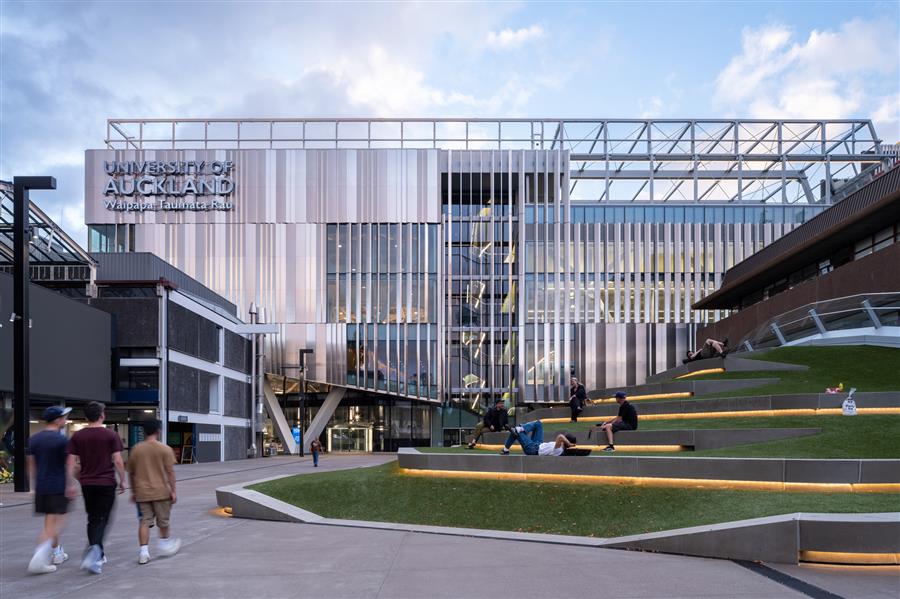
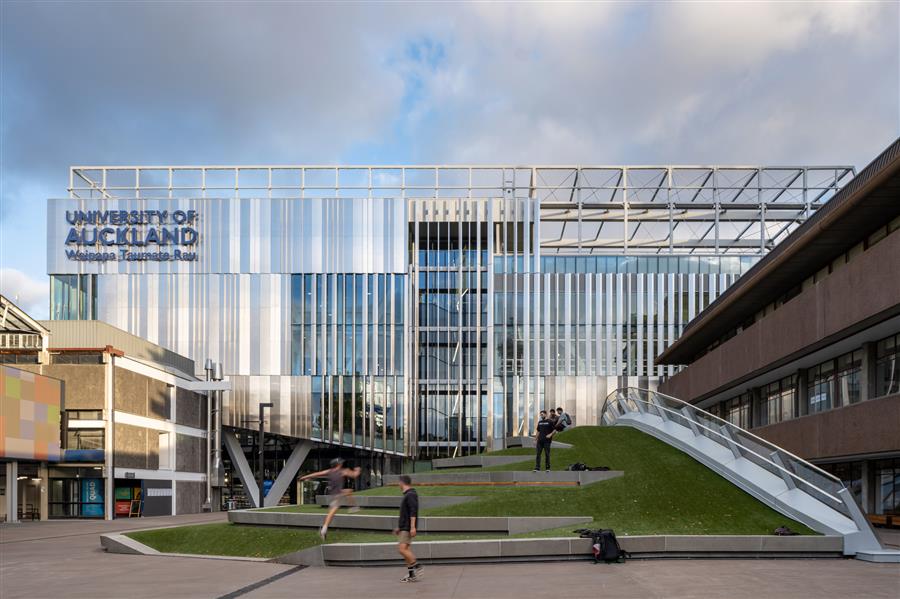 奥克兰大学是一所位于城市中心的校园,完全融入这座拥有180万人口的城市之中。奥克兰地形起伏,遍布雨林和53个休眠火山口,构成了奥克兰火山带。该项目密集的学生区与坡状地形给可达性、互联互通性和服务设施带来了挑战。 The University of Auckland is an urban campus that is fully meshed into the heart of this city of 1.8-million people. Auckland's dramatic topography is dotted with rainforest and 53-inactive volcanic centres that make up the Auckland volcanic field. This project's dense student precinct and sloping site created challenges for accessibility, interconnection, and serviceability. 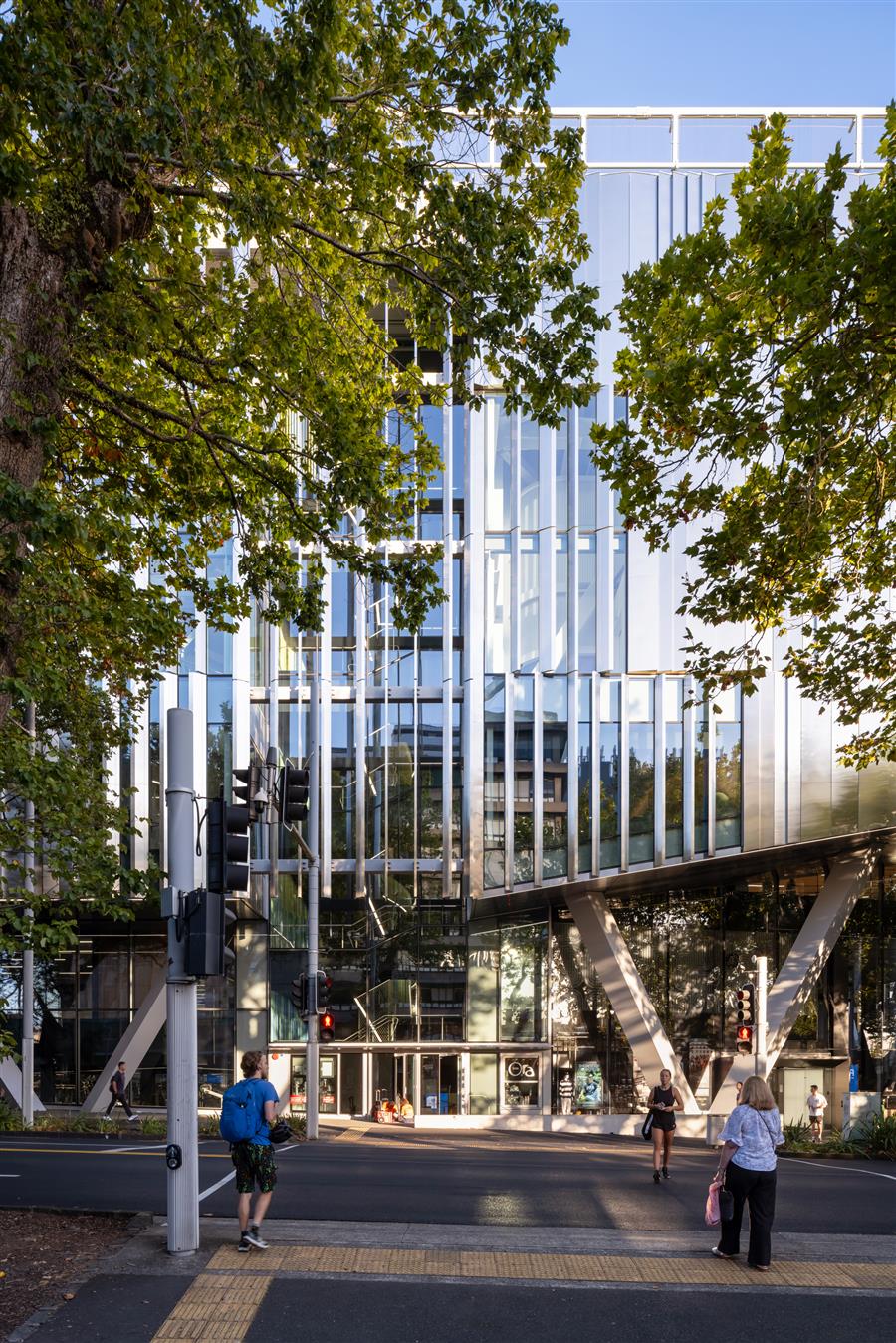 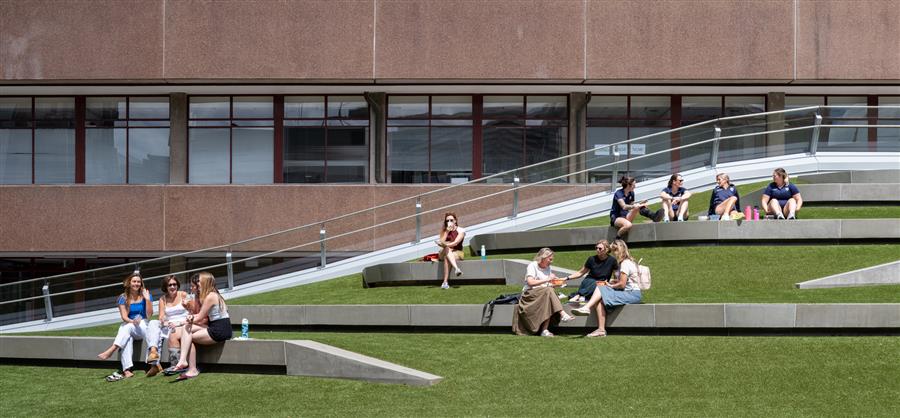 将体育馆抬高并把游泳馆设在地下,使地面空间得以释放,便于学生在校园内自由通行,并打造了一个全新的学生广场——这是校园中心一处令人难忘的公共空间。从街道层到屋顶跑道,每一层都设有大型活动空间。这些场馆分布在中央健身核心区域的两侧,以优化用户的参与度和互动体验。 Raising the sports halls and placing the aquatic hall below grade frees the ground plane for fluid accessible movement through the precinct and creation of a new student plaza – a memorable public space at the heart of the campus. As one rises from street level to the roof running track, a major programme volume occurs at each level. These venues are alternated on either side of a central fitness core in order to optimise user participation and engagement. 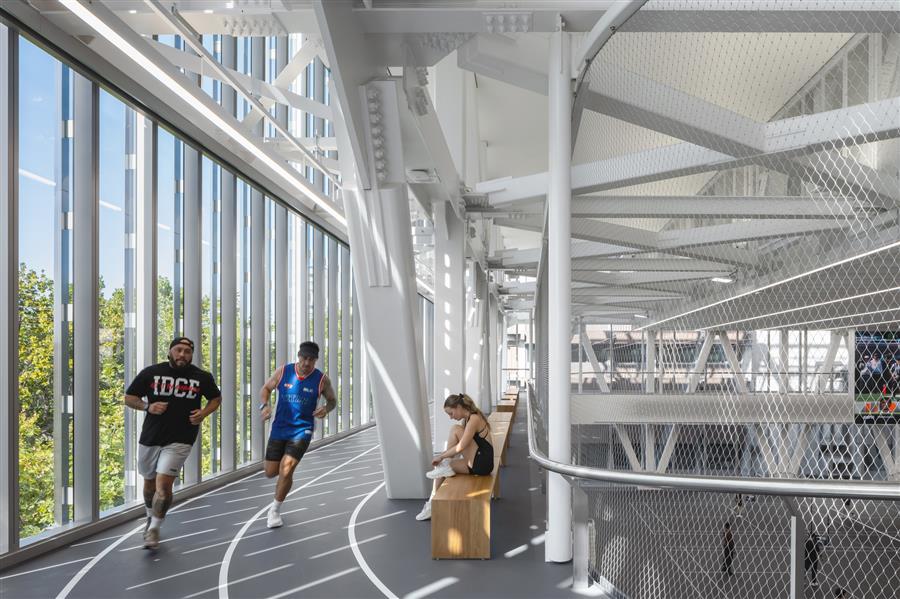 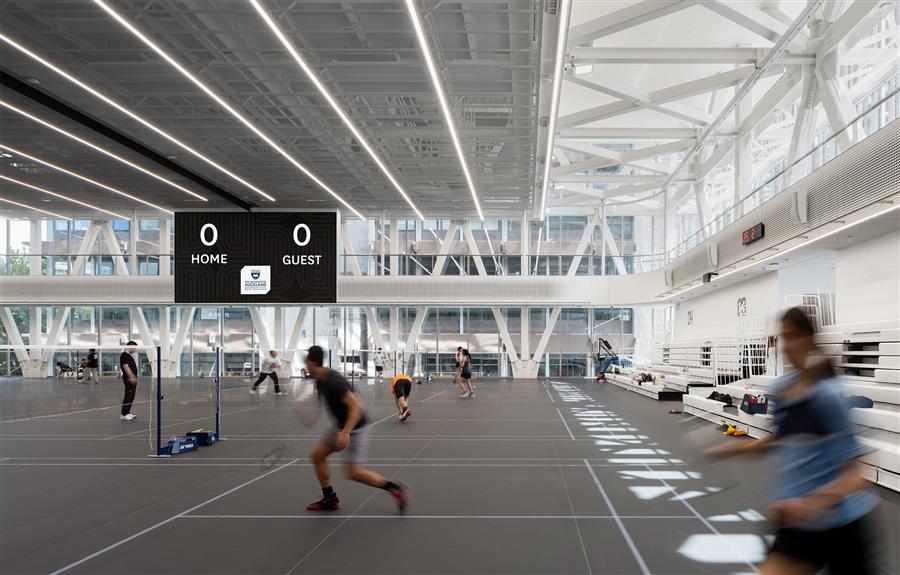 呼应自然环境——奥克兰坐落于一个海峡之上,太平洋与塔斯曼海交汇处均设有港口,形成了极具特色的戏剧性天气现象。为体现这一特点,建筑外立面采用不锈钢板和相配的百叶窗,将整体体量统一成单一却富有节奏感的形式。外墙饰面旨在淡化其大面积立面的材质感,捕捉奥克兰变幻莫测的天气与周围自然景观的倒影。百叶窗不仅提供了动态的景观视野,同时避免了内部活动时的眩光干扰。 Reflecting our natural environment – Auckland is situated on an isthmus with a harbour on both the Pacific Ocean and the Tasman Sea, creating signature dramatic weather patterns. To reflect this, the building is clad with stainless steel panels and matching louvres to unify the mass into a single but punctuated form. The exterior cladding seeks to dematerialise its large facades, capturing reflections of the shifting Auckland weather and surrounding nature. The louvres allow dynamic views of activity, while ensuring no internal performance glare. 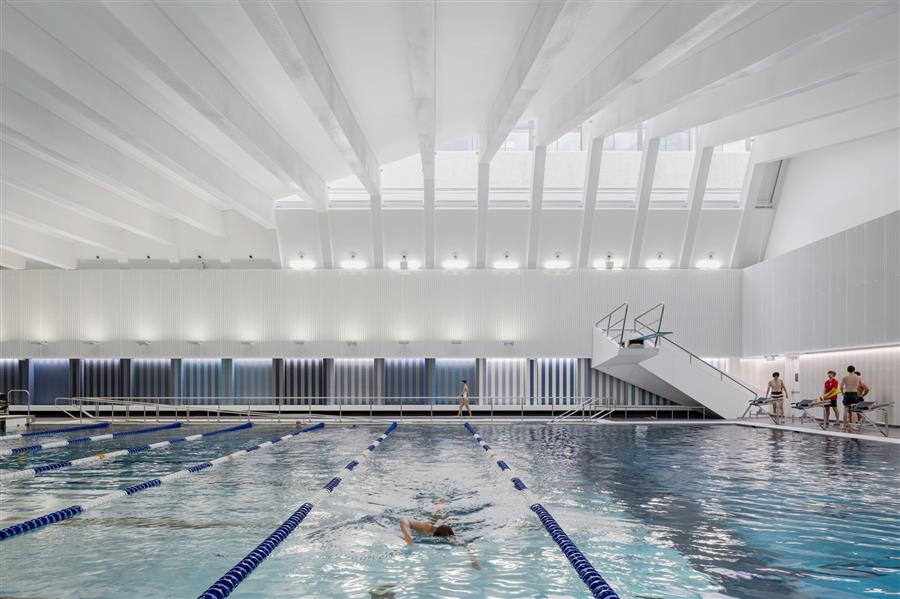 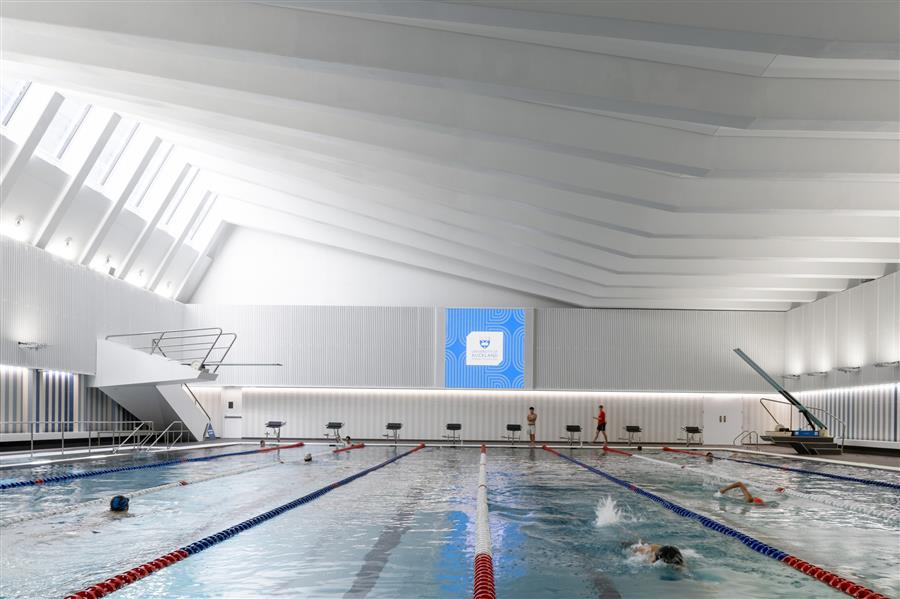 地下水族馆的造型屋顶在上方形成了一处新的学生广场。跳台上方所需的净空空间构成了一座小丘——名为“塔乌马塔”(Taumata),意为“山上的休憩之地”,成为广场的焦点,象征着大学所在地所在的火山“朗吉普克”(Rangipuke)。塔乌马塔南侧的玻璃立面将自然光线引入水族馆,并提供一个观景平台,可俯瞰下方的水下活动。 The shaped roof of the below-grade aquatics hall creates a new student plaza above. Required clearance over the diving board forms a mound – Taumata, meaning 'resting place on a hill' – is the focal point of the plaza, symbolising Rangipuke, the name of the volcano that the University sits on. The southern glazed face of Taumata provides natural light into the aquatic hall and a viewing platform to observe the aquatic activity below. 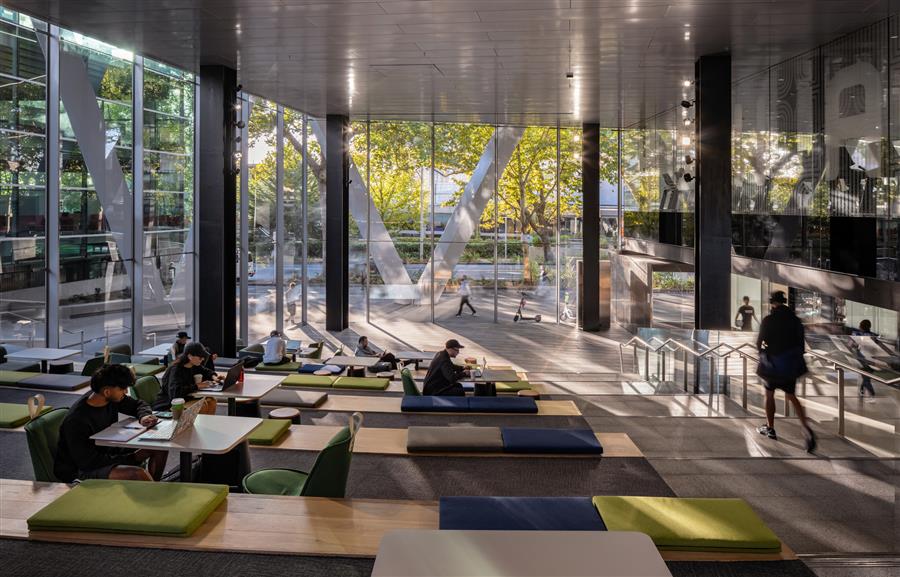 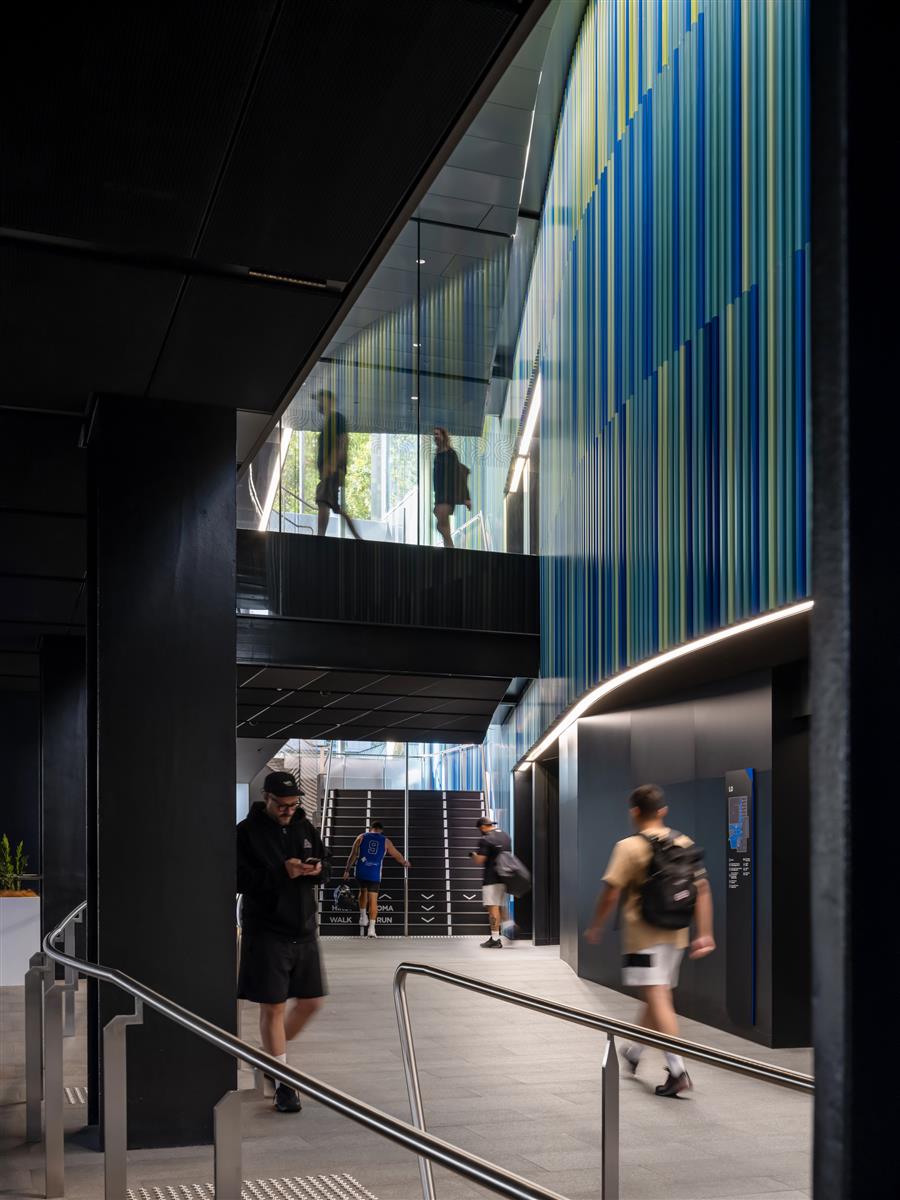 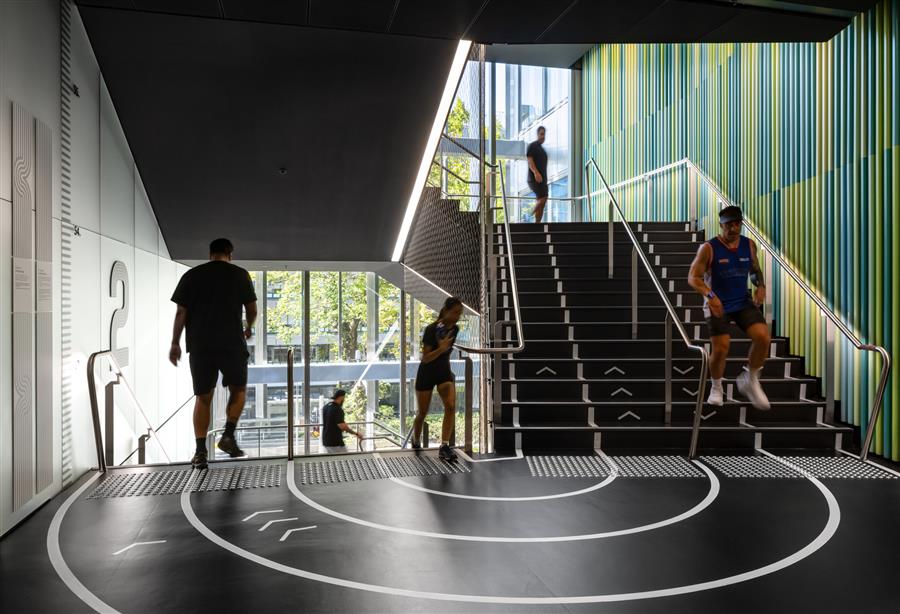 动感运动——充满活力的垂直流动是建筑健身与社交的驱动力。位于中央核心两端的两段宽3米的楼梯,兼具紧急出口、健身环线、社交聚集空间和自然采光功能。楼梯设计为1公里长的环形路径,连接地下泳池与无障碍屋顶。铝制横条构成的渐变色彩景观,勾勒出从洞穴到火山峰、再至天空的独特旅程。地面标识区分了跑步与步行路线,标高标记则指示垂直攀登过程中的不同高度。彩色核心结构可从校园及城市街道清晰可见,成为休闲与健康活动的动态背景,同时树立起一个独特的校园地标,鼓励人们积极行动。 Gamify movement – Vibrant and vertical movement is the building's fitness and social animator. Two, 3-metre-wide stairs positioned at opposite ends of the central core serve as emergency exits, fitness loop, social convener, and daylight providers. Designed as a 1-kilometre circuit, the stairs connect the below-grade pool to the accessible rooftop. A gradient colour-field of aluminium battens captures a character-defining journey from grotto to volcanic peaks, to sky. Floor markings denote run and walk lanes, and level markers indicate elevation height during the vertical climb. Visible from the campus and city streets, the coloured core serves as a dynamic backdrop for recreation and wellness while establishing itself as a distinctive campus landmark that encourages movement. 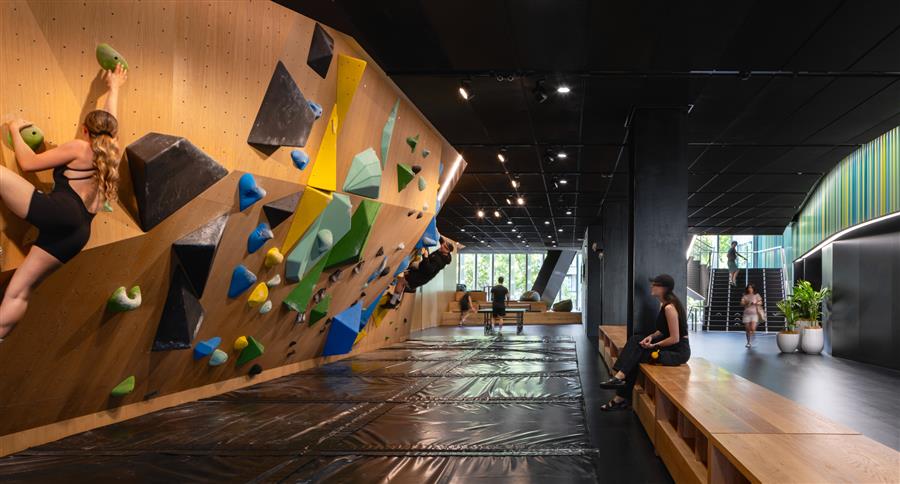 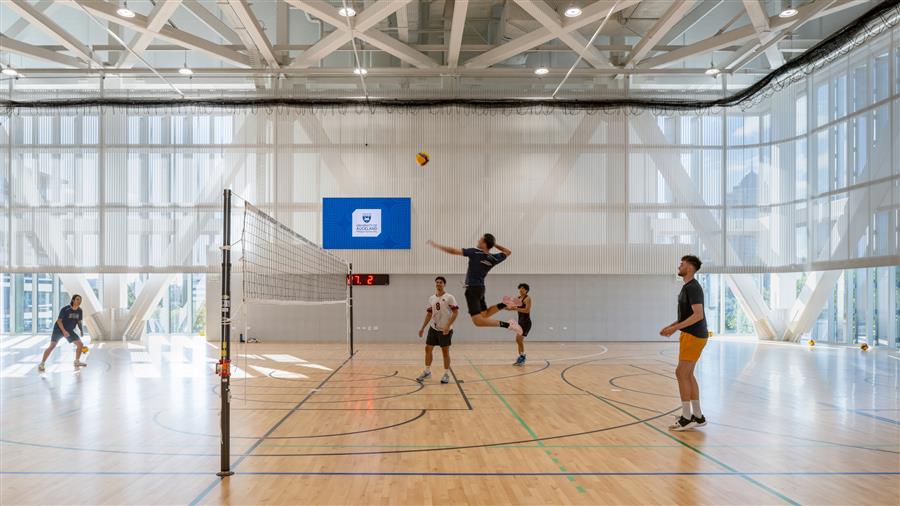 人人皆可参与——Hiwa致力于最大化各类健康机会。三个休闲区域的屋顶被设计为开放且充满活力的运动、休闲与社交空间,这些空间融合了亲生物理念,将使用者与自然紧密连接。上层屋顶设有户外跑步道、健身区、可灵活安排的活动与社交空间,并可俯瞰奥克兰及其雄伟的港口景观。那些不认同传统体育观念的学生也欢迎加入,学校在各层级精心设置了社交、休闲及拓展空间,包括咖啡厅、治疗室、小憩舱、乒乓球台、软座椅以及触地休息区,为通往建筑内更大规模运动空间提供了便捷入口。 Accessible to all – Hiwa maximises opportunities for wellness in all its forms. The roofs of the three recreation volumes are developed as open and active athletic, leisure, and social spaces – these spaces employ biophilia and connect users to nature. The upper roof offers an outdoor running track, fitness space, programmable event and social space, and elevated views to Auckland and its majestic harbour. Students who may not identify with conventional ideas of athletics are welcome to participate through deliberately integrated social, leisure, and outreach spaces at all levels, including a café, therapy, napping pods, table tennis, soft seating, and touch-down spaces that create gateways to the larger sport spaces throughout the building. 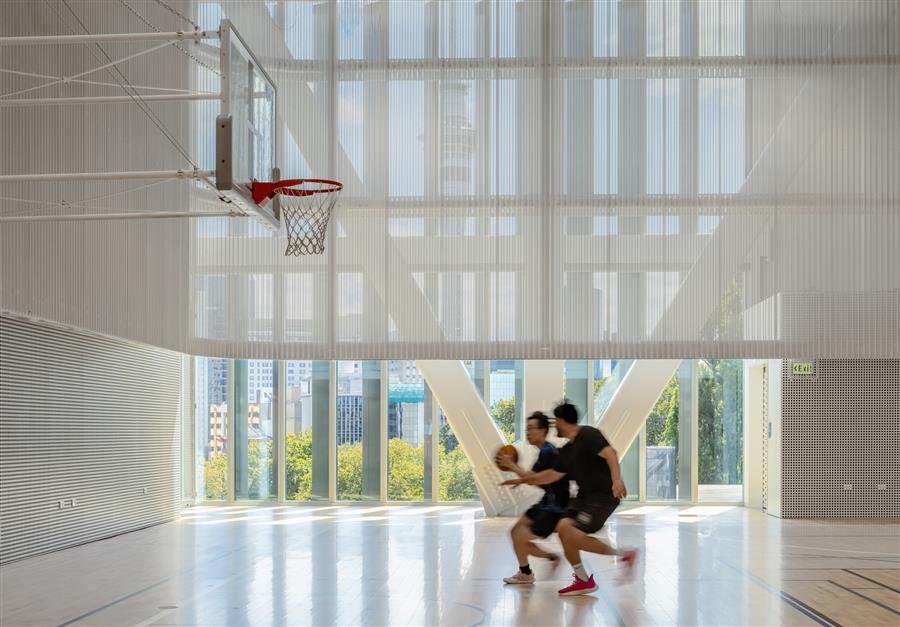 Hiwa体现了追求、成长与抱负——在大学毛利事务副校长办公室的协作下,识别出关键的设计机遇,并任命哈乌米的卡尔·约翰斯通担任主要文化设计合作人。他的职责是将校园整体主题转化为具体项目成果,确保文化元素的真正融合。基于“城市校区叙事”(Te Paepae a Tāne),项目制定了一套特定的文化框架,使意义得以在多个层面体现。在宏观层面上,文化元素被融入建筑的材质与形态之中。 Hiwa embodies aspiration, growth, and ambition – In collaboration with the University's Pro Vice-Chancellor Māori Office, key design opportunities were identified, with Karl Johnstone of Haumi appointed as the lead cultural design collaborator. His role was to translate campus-wide themes into project-specific outcomes, ensuring authentic cultural integration. Drawing from Te Paepae a Tāne (City Campus narrative), a project-specific cultural framework was developed, embedding meaning at multiple scales. At a macro level, cultural references are woven into the building's materiality and form. 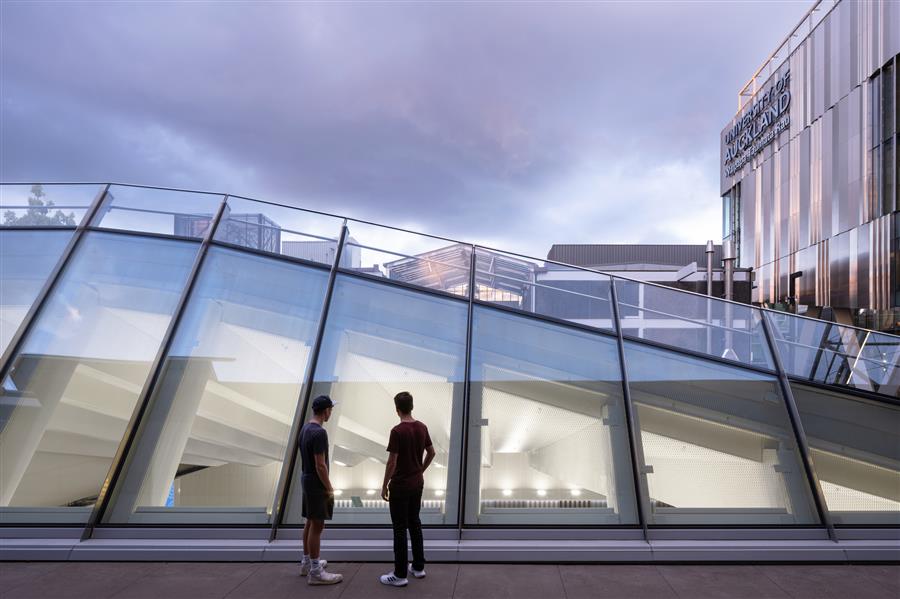 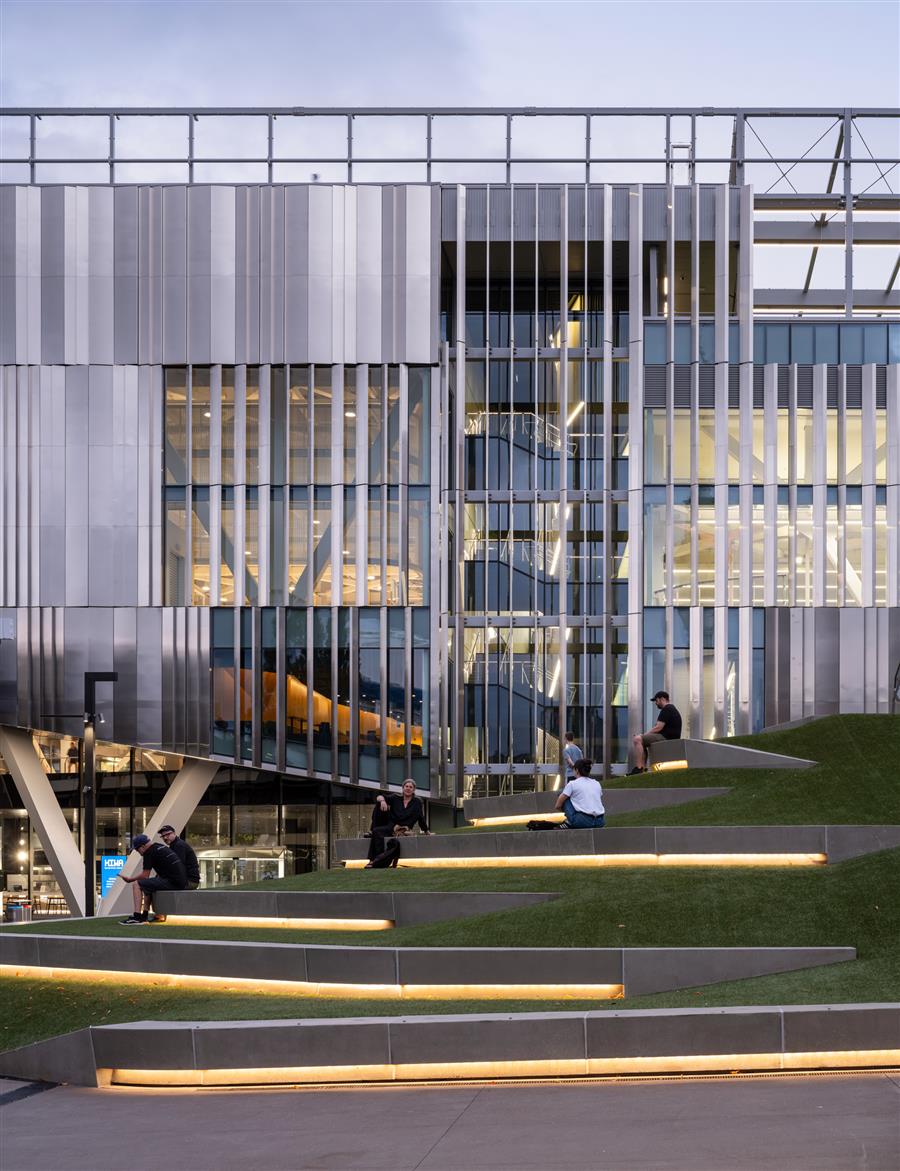 反射性的外立面设计灵感源自特瓦伊马塔,而地面层的凸出式网格柱则呼应了阿罗毛纳,象征着“维乌阿”(whenua)与建筑之间的紧密联系。泳池大厅上方的陶玛塔(景观土丘)呼应了奥克兰的火山山体及其独特的地质特征。在更细微的尺度上,这些叙事也体现在人性化细节中,包括雕刻艺术作品融入接待区和楼梯扶手、定制玻璃装饰图案,以及专为毛利语、盲文和英语路标设计的专属项目字体。 The reflective upper facades draw inspiration from Te Waitematā, while at the ground plane, the expressed diagrid columns reference Aramoana, symbolising a tethering connection between whenua and building. The Taumata (landscape mound) above the pool hall echoes Auckland's volcanic maunga and unique geology. On a more intimate scale, these narratives inform human-scaled details, including carved artworks integrated into reception and stair handrails, custom patterns for glazing manifestations, and a bespoke project font for wayfinding signage in te reo Māori, Braille, and English. 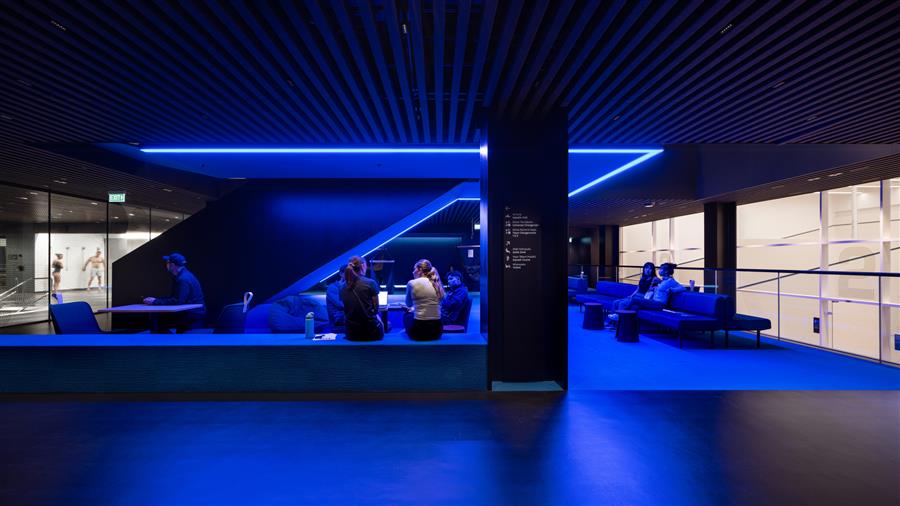 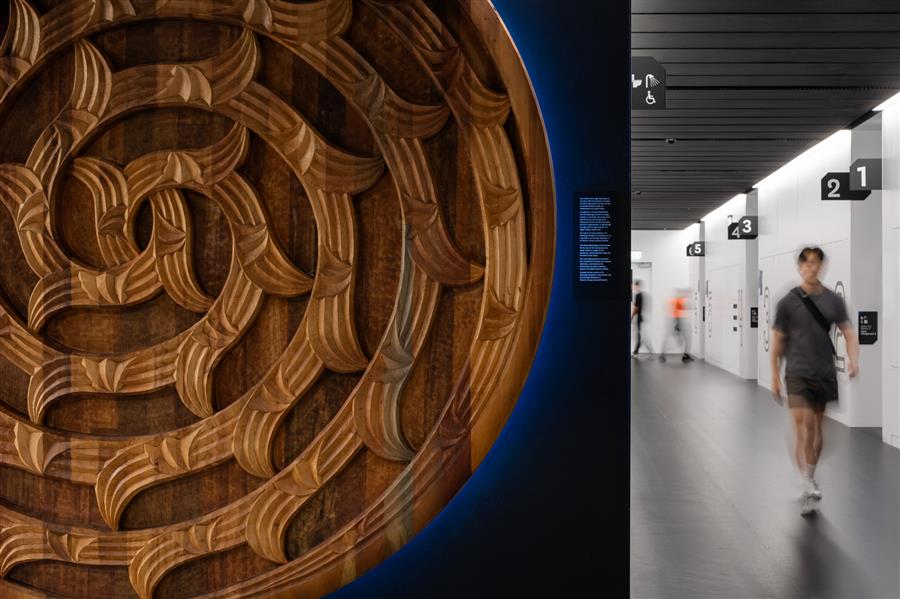 新西兰高等教育体育设施的新标杆——该项目体现了以社会与环境可持续性为导向的设计成果,为新西兰高等教育体育设施树立了新的世界级标准。项目的关键成果与奥克兰大学可持续发展目标3(健康与福祉)以及环境可持续性目标保持一致。 A new world-class benchmark for tertiary sporting facilities within Aotearoa – This project exemplifies a design outcome driven by both social and environmental sustainability, setting a new world-class benchmark for tertiary sporting facilities within Aotearoa. Key outcomes for the project are in alignment with the University of Auckland's Sustainable Development Goal 3: Good Health and Well-being, and environmental sustainability has been driven by designing for durability and longevity. The building achieves thermal comfort through the use of Insulating Glass Units (IGU's), large overhangs, and external fins to reduce solar gain. It reduces carbon footprint through the use of a stainless steel rainscreen (opposed to aluminium), recycled polyester insulation, construction waste reduction measures, low VOC products, and designing out additional ceilings where possible. 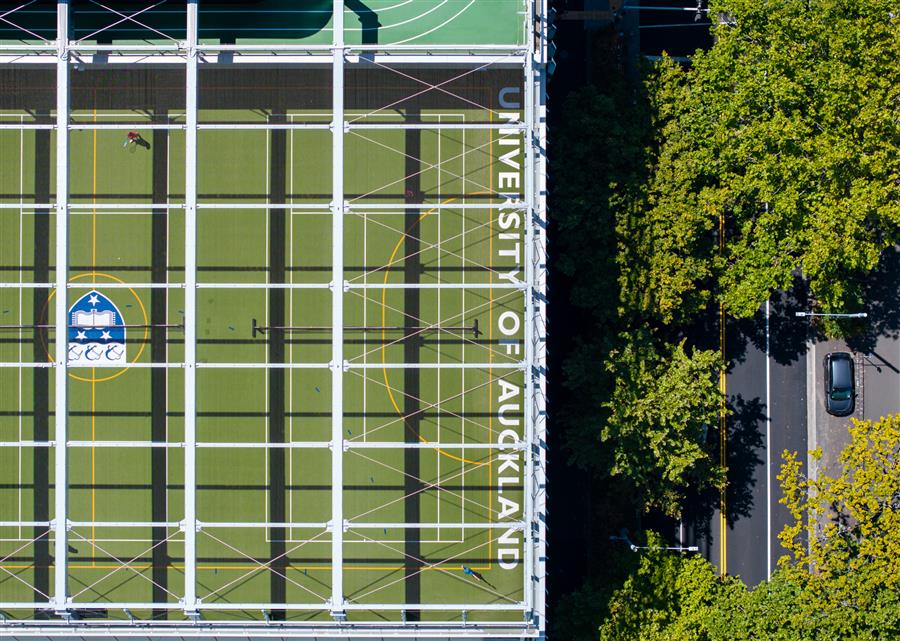 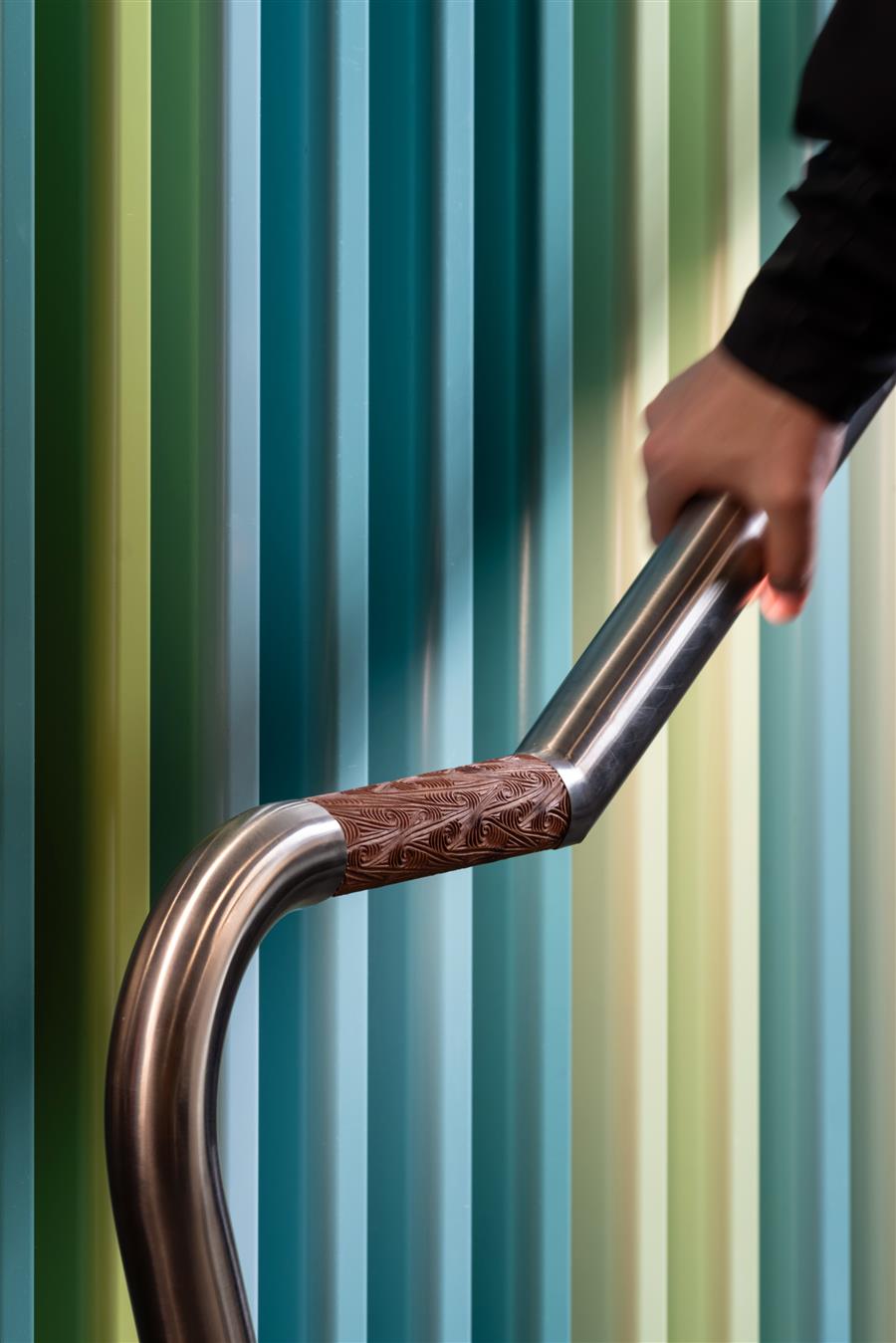 技术图纸 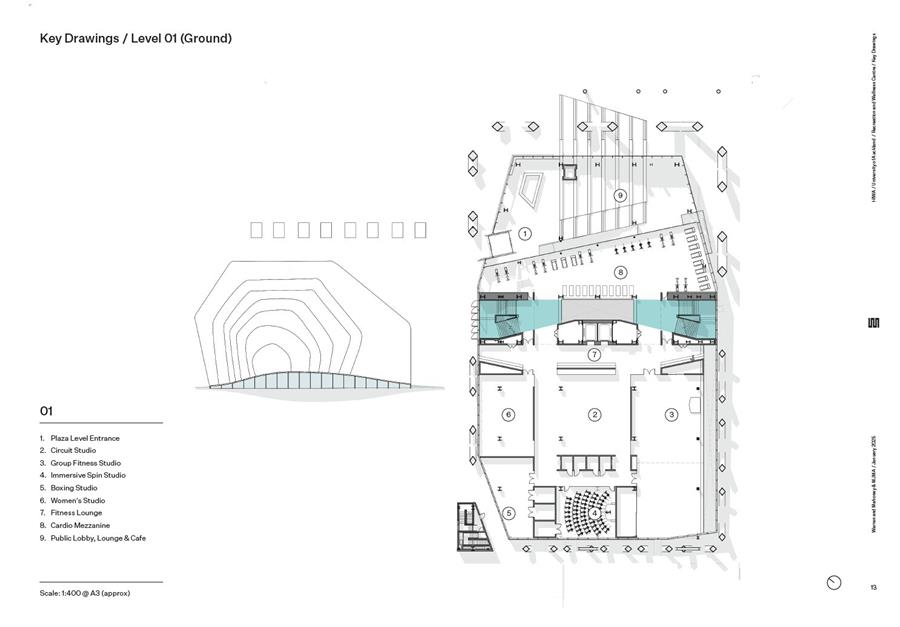 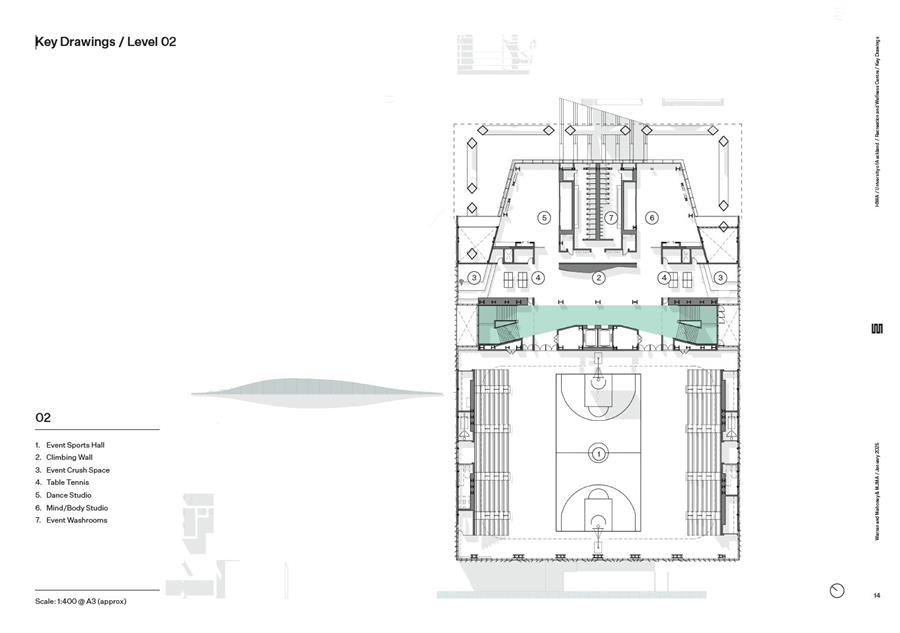 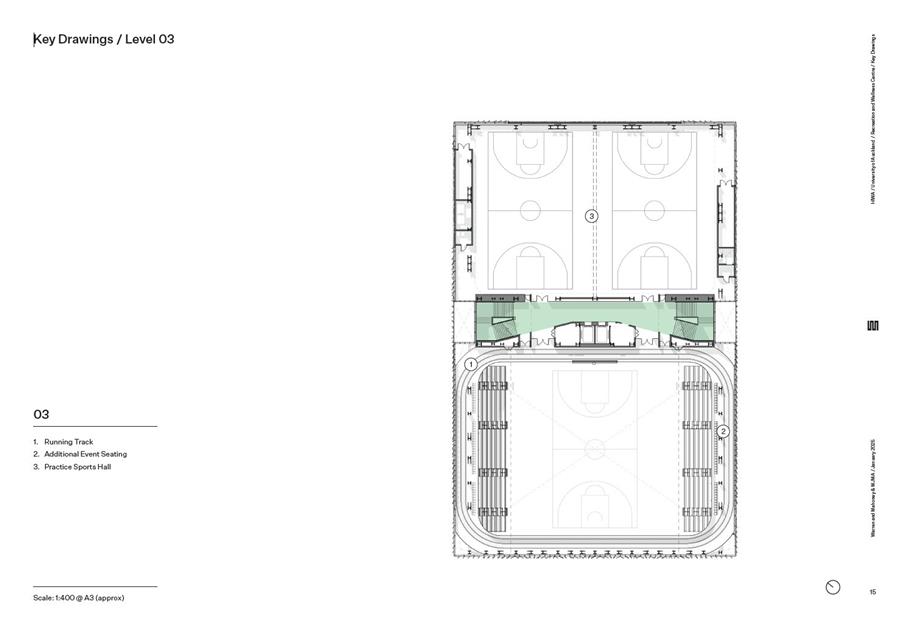 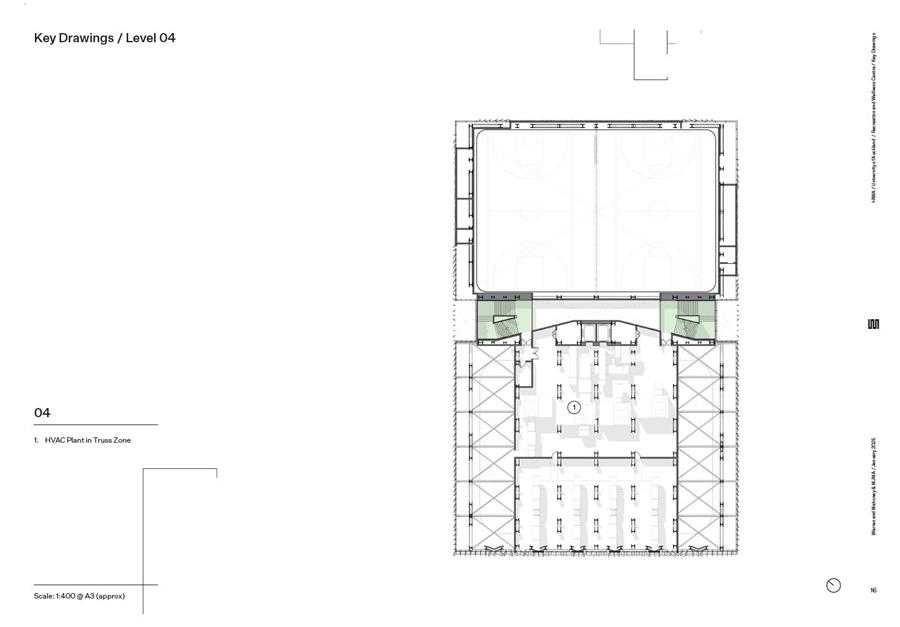 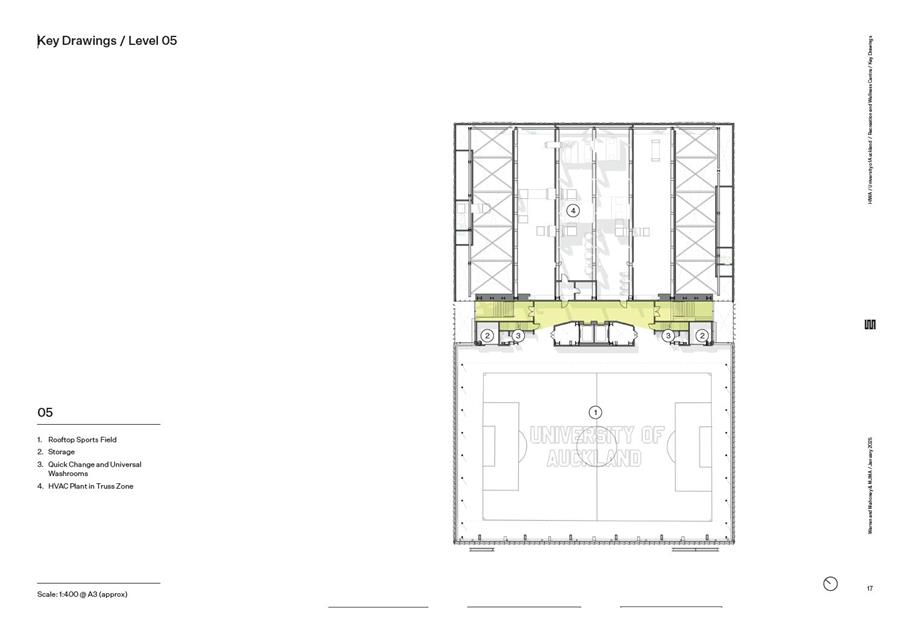 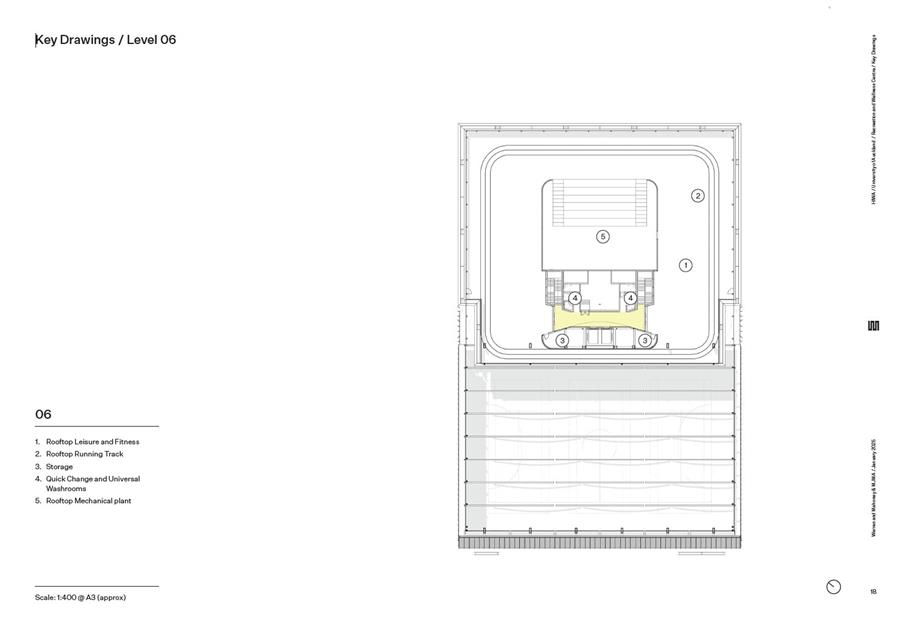 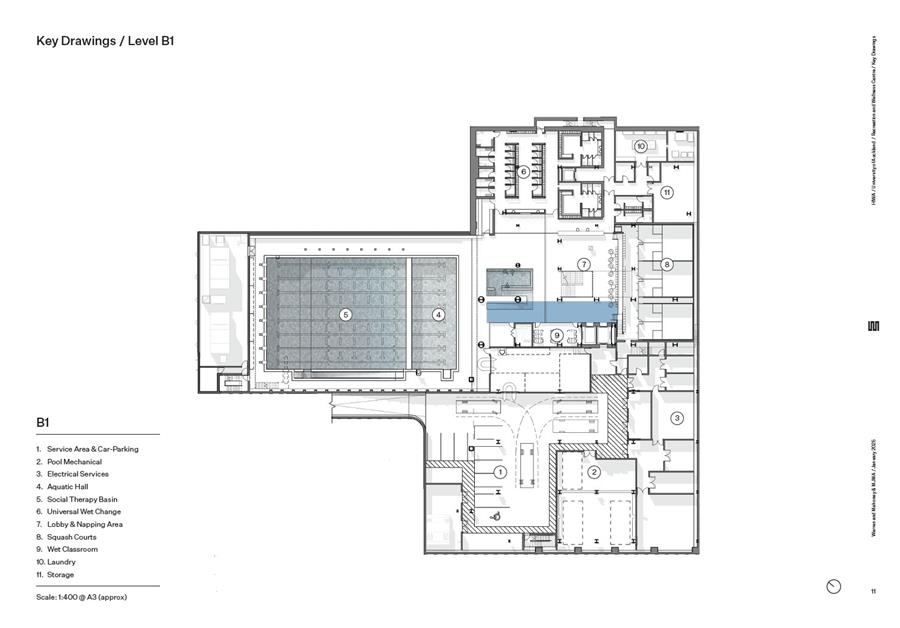 ▲平面图 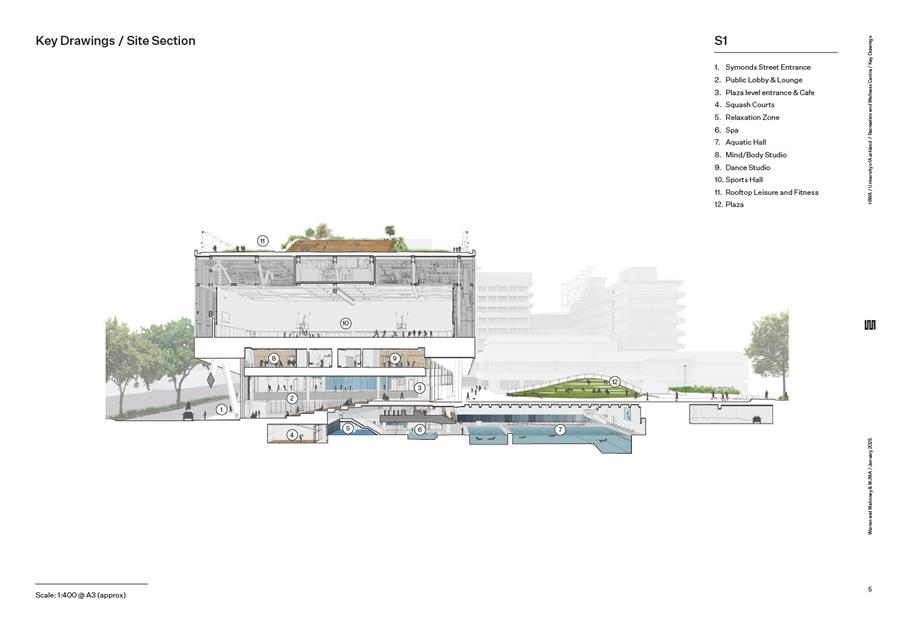 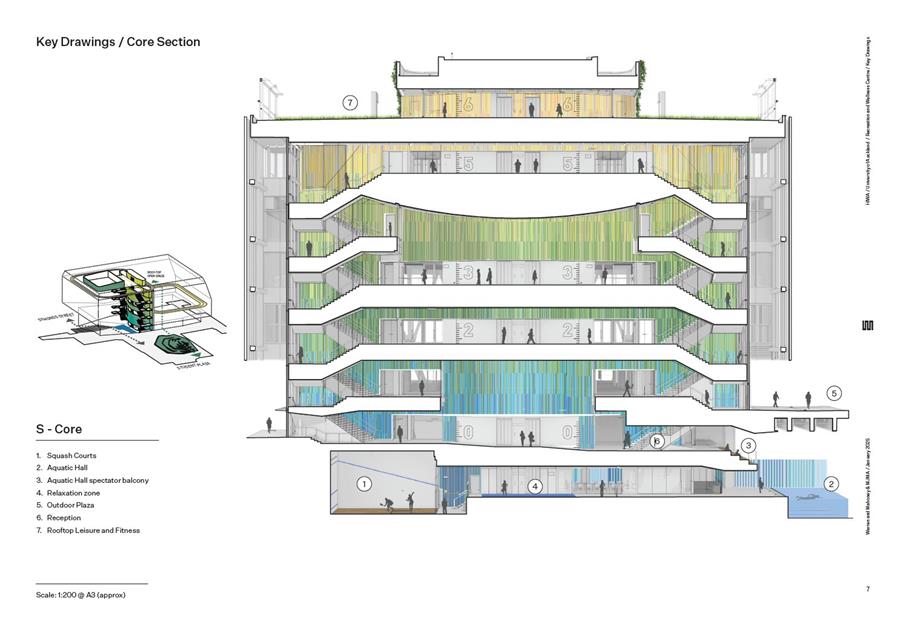 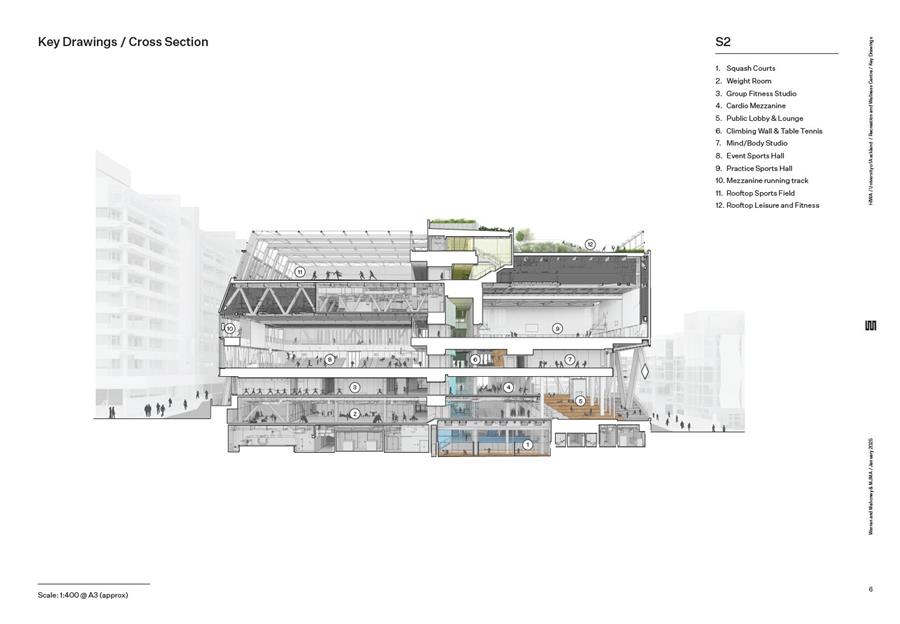 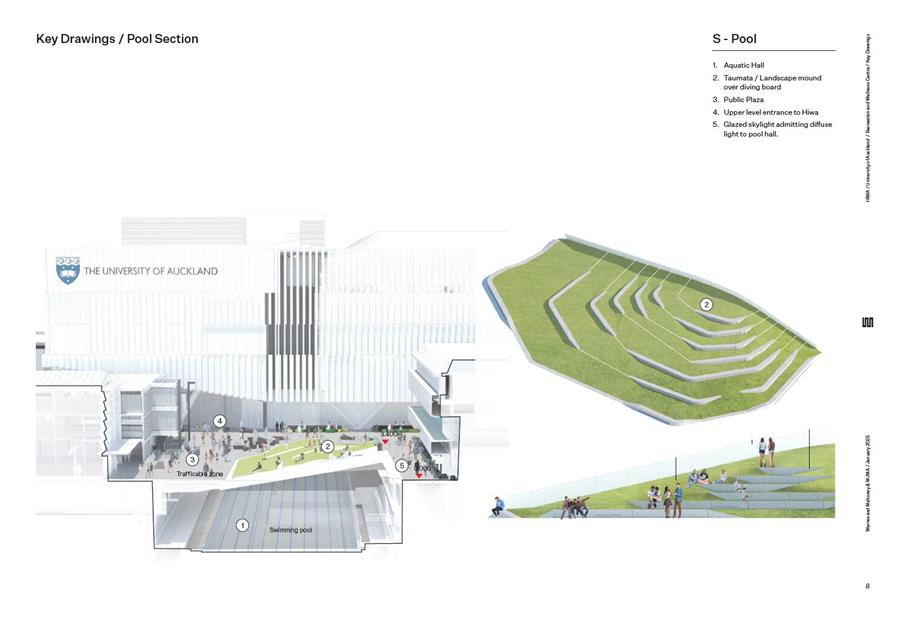 ▲剖面图 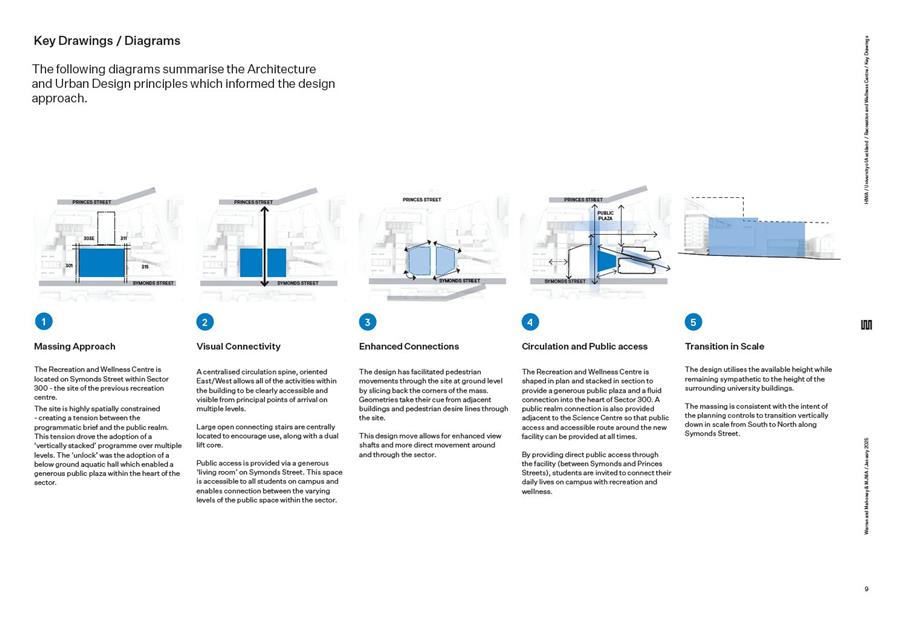 ▲示意图  支持者盛赞它“朝天扬帆”的造型,是山城迈向国际大都会的视觉标杆;反对者则直指其体量过于巨大,压迫感太强,如一堵密不透风的“高墙”,硬生生切断了渝中半岛原有的天际线。             据报道,在备受瞩目的里约网络峰会(Web Summit Rio)期间,里约热内卢市政府正式官宣了“里约AI城(Rio AI City)”计划,这一雄心勃勃的战略构想,旨在将里约打造为全球领先的人工智能产业高地。     Hyphen表示,绿色立面、生物多样性走廊以及与大西洋森林生态系统的水系连接,可提供被动降温,改善局部微气候。  值得注意的是,因着项目毗邻2016年里约奥运会的奥林匹克公园,将充分利用现有基础设施,减少大规模新建带来的环境负担。里约市长爱德华多·帕埃斯对此寄予厚望,称其将成为“拉丁美洲最大的数据枢纽”。   |
|